
SCHOLARSHIP APPLICATION: (Deadline: APRIL 30th, 2027)
Please ensure all fields are filled in completely.To view previous winner: Click Here
(IF YOU HAVE ANY QUESTIONS, PLEASE EMAIL THE PROGRAM ADMINISTRATOR AT RYAN@STUDENTSCHOLARSHIPS.ORG)
Aerial Work Platform Part
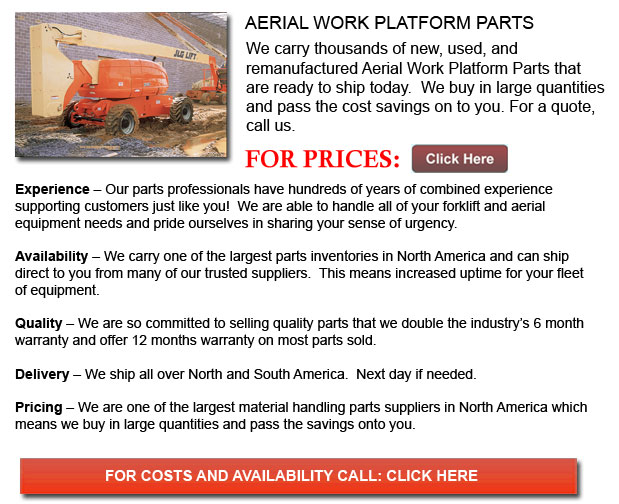

Part for Aerial Work Platform - Aerial lift trucks can be used to accomplish many distinctive tasks executed in hard to reach aerial spaces. Some of the duties associated with this kind of lift include performing routine preservation on buildings with high ceilings, repairing phone and utility lines, lifting burdensome shelving units, and pruning tree branches. A ladder could also be utilized for some of the aforementioned tasks, although aerial hoists offer more security and strength when correctly used.
There are several models of aerial hoists existing on the market depending on what the task needed involves. Painters often use scissor aerial lifts for instance, which are grouped as mobile scaffolding, handy in painting trim and reaching the 2nd story and higher on buildings. The scissor aerial platform lifts use criss-cross braces to stretch and lengthen upwards. There is a table attached to the top of the braces that rises simultaneously as the criss-cross braces raise.
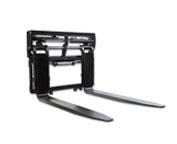
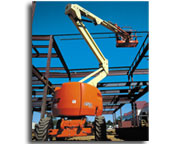
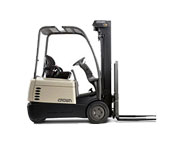
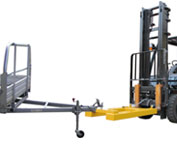
Cherry pickers and bucket lift trucks are a further type of the aerial hoist. Typically, they contain a bucket at the end of an elongated arm and as the arm unfolds, the attached bucket lift rises. Forklift parts use a pronged arm that rises upwards as the lever is moved. Boom lifts have a hydraulic arm that extends outward and raises the platform. Every one of these aerial platform lifts have need of special training to operate.
Training courses offered through Occupational Safety & Health Association, acknowledged also as OSHA, deal with safety steps, system operation, maintenance and inspection and device cargo capacities. Successful completion of these training courses earns a special certified license. Only properly licensed individuals who have OSHA operating licenses should operate aerial lifts. The Occupational Safety & Health Organization has developed rules to uphold safety and prevent injury when using aerial hoists. Common sense rules such as not using this piece of equipment to give rides and ensuring all tires on aerial lift trucks are braced in order to hinder machine tipping are mentioned within the rules.
Unfortunately, figures illustrate that in excess of 20 operators die each year when working with aerial hoists and 8% of those are commercial painters. Most of these mishaps are due to inappropriate tire bracing and the lift falling over; for that reason some of these deaths were preventable. Operators should ensure that all wheels are locked and braces as a critical safety precaution to prevent the instrument from toppling over.
Other rules involve marking the encircling area of the machine in an obvious manner to protect passers-by and to ensure they do not come too close to the operating machine. It is vital to ensure that there are also 10 feet of clearance amid any electrical cables and the aerial lift. Operators of this machinery are also highly recommended to always have on the appropriate security harness when up in the air.
Click to Download the PDF
Forklift Parts

TOLL FREE: 1-888-695-7994
forkliftpartsnebraska.com
Email Us
About Us